
WASHINGTON, D.C. – As the U.S. federal government enters its third week of a contentious shutdown, President Donald Trump signed an executive order on October 15, 2025, directing the Department of Defense to ensure continuous pay for all active-duty military personnel. This move comes as the budget impasse between the Republican and Democratic parties shows no immediate signs of resolution, leaving approximately 1.3 million service members at risk of missing their mid-October paychecks.
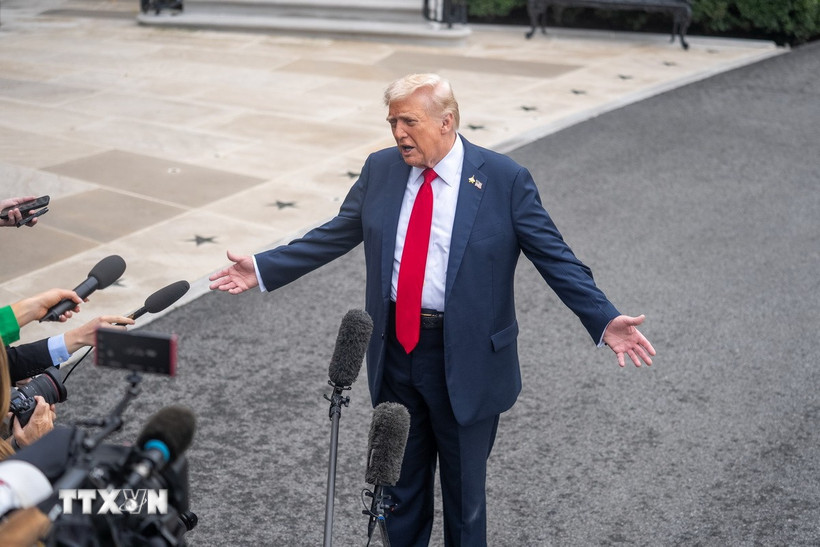
The presidential directive, issued from the White House, explicitly instructs Secretary of Defense Pete Hegseth to “utilize any and all appropriated funds available in the fiscal year 2026 budget to execute the payment of salaries and allowances for active-duty military personnel.” This action shields uniformed members of the military—who are deemed "essential national security personnel" and must continue working regardless of the shutdown—from the immediate financial hardship faced by hundreds of thousands of other federal employees.
The military, unlike many other government departments, is typically protected during shutdowns. In previous government funding crises, Congress routinely passed standalone legislation, often with bipartisan support, specifically to ensure that the armed forces received their compensation without interruption. This time, however, the political deadlock has been more severe. Although Republican Representative Jen Kiggans introduced the “Pay Our Troops Act” to safeguard military pay, the bill has yet to pass through the legislative chambers.
House Speaker Mike Johnson leveled accusations against the Democratic party, stating they were "holding the military hostage" by refusing to support the Republican spending plans designed to reopen the government. Johnson claimed that numerous Democratic lawmakers, many of whom represent states with large military populations, were utilizing the service members as leverage in the ongoing political battle.
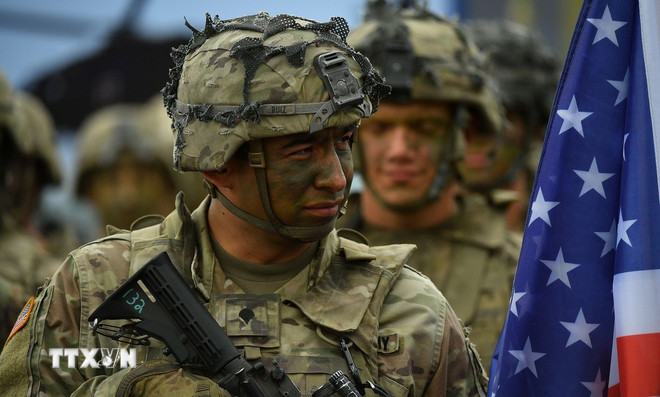
Democrats countered fiercely, arguing that the Republican party, which currently controls the House, Senate, and the White House, has refused to engage in meaningful compromise. They insisted that any new spending package must include provisions to extend crucial healthcare subsidies for the estimated 24 million Americans facing expiration later this year. This sharp political division over priorities has paralyzed the legislative process, making unilateral action by the executive branch, such as President Trump’s executive order, necessary for critical functions.
Economic Damage and Aviation Safety Risks
Beyond the immediate crisis facing military families, the government shutdown is inflicting substantial damage on the national economy. U.S. Treasury Secretary Scott Bessent warned that the prolonged closure has begun to "eat into the core" of the economy, estimating a staggering loss of approximately $15 billion in economic output per day.
Speaking at the annual meetings of the International Monetary Fund (IMF) and the World Bank (WB) in Washington, Bessent acknowledged the underlying strength of the American economy, particularly the robust investment momentum in artificial intelligence (AI) and technology sectors. However, he stated that the shutdown represented the "biggest obstacle" to sustained growth. Bessent urged Democratic cooperation to end the stalemate, though he simultaneously touted President Trump's tax and tariff policies as drivers of a massive new investment wave, drawing parallels to the "railroad boom of the late 19th century" and the "Internet era of the 1990s."
Meanwhile, the U.S. aviation sector has raised grave safety warnings due to the continuous lack of pay for essential transportation workers. Airlines for America (A4A) CEO Chris Sununu called for an immediate end to the shutdown, emphasizing that the "pressure and risks are mounting daily." Around 13,000 air traffic controllers and 50,000 Transportation Security Administration (TSA) agents, who have received only partial pay, face the prospect of receiving "zero dollar paychecks" if the closure extends for another ten days.
Industry groups, including the Air Line Pilots Association (ALPA) and the National Air Traffic Controllers Association (NATCA), echoed the urgency, fearing a repeat of the 2019 crisis. That 35-day shutdown saw widespread sick-outs among air traffic and security personnel, forcing the Federal Aviation Administration (FAA) to severely restrict flight traffic in major hubs like New York and ultimately compelling Congress to reach an agreement. As the current shutdown stretches past its two-week mark, it continues to threaten the livelihoods of millions of federal workers, placing immense strain on the world's largest economy and dramatically escalating political tensions in Washington.