
Introduction

Some tributes are designed for the world to witness. They arrive with cameras, carefully arranged lighting, polished introductions, and the full weight of public ceremony. And then there are the moments that seem to belong to grief itself—unannounced, unadorned, and so private in spirit that the fact we hear of them at all feels almost accidental. That is the emotional force behind NO CAMERAS. NO CROWD. JUST THE WIND. — THE QUIET TRIBUTE THAT REVEALED WHAT REBA AND DOLLY NEVER NEEDED TO SAY OUT LOUD. It is a title that captures not just an event, but a truth older listeners understand instinctively: the deepest expressions of love and respect are often the ones that make the least noise.
What makes this image so moving is that it strips away everything that usually surrounds celebrity. Reba McEntire and Dolly Parton are two of the most recognizable women in American music, artists whose names alone can fill arenas and command national attention. Yet in this moment, they do not stand before us as towering institutions or carefully managed public figures. They return as something more human, more fragile, and perhaps more profound: two women carrying memory into the evening air. On the anniversary of Toby Keith's passing, the significance lies not only in what they sang, but in the way they chose to offer it. No spectacle. No audience waiting for emotional cues. No grand attempt to turn sorrow into a public event. Just presence, silence, and a song that still carried the shape of the man they were remembering.
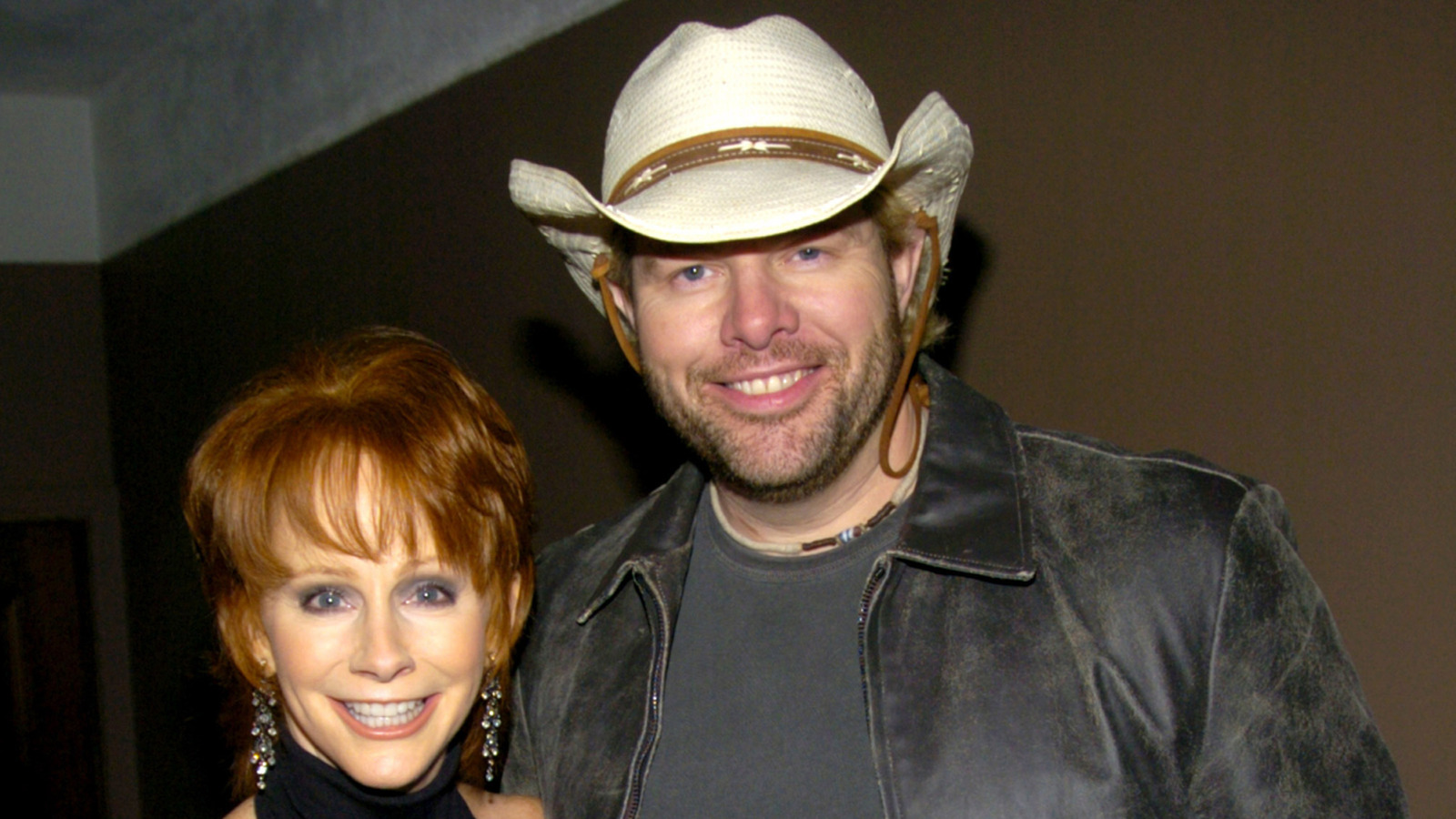
That is what gives the moment its unusual weight. In public tributes, emotion is often filtered through performance. Even sincere feeling can become entangled with production, expectation, and the knowledge that millions may be watching. But when the setting falls quiet—when there are no cameras, no applause, no stagecraft to lean on—what remains is something harder to manufacture and easier to trust. The tribute becomes less about being seen grieving and more about grief itself. For mature listeners, that distinction matters. Life teaches us that the most meaningful farewells rarely happen under bright lights. They happen in chapels, at gravesides, in empty rooms, on porches at dusk, or in the soft silence after everyone else has gone home.
Reba and Dolly have each built careers on extraordinary vocal power, but perhaps what matters most here is restraint. A moment like this would not require vocal fireworks or dramatic declarations. It would require something older and wiser: emotional understanding. The understanding that friendship does not always announce itself. That respect does not need explanation. That loss, when it is real enough, has a way of reducing language to its most essential form. They did not need to explain Toby Keith's place in their memories. They did not need to turn remembrance into a speech. By simply standing together and singing into the open air, they said what words often fail to carry—that some people leave behind a silence so distinct that music becomes the only fitting response.
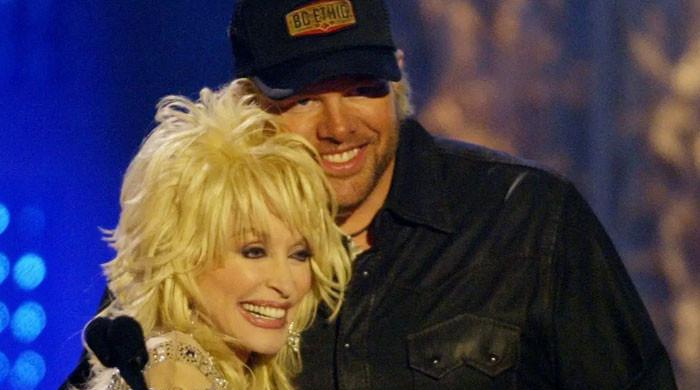
There is also something deeply Southern, deeply human, and deeply timeless in the quietness of such a gesture. Country music has always been at its best when it honors the ordinary dignity of feeling. Not every truth needs a spotlight. Not every goodbye needs a stage. The finest songs in this tradition often understand that sorrow is not less powerful when spoken softly. In fact, it may be more powerful. A low voice, a fading light, a familiar melody carried on the wind—these things can hold more honesty than the grandest public ceremony.
For older readers especially, this imagined moment resonates because it reflects what many come to know with age: that the strongest bonds are not always the ones most publicly displayed. Some friendships are built through decades of shared rooms, shared losses, shared admiration, and the quiet recognition of what another life has meant. Reba and Dolly did not need to make the moment larger. They only needed to make it true. And truth, when it arrives without ornament, has a way of settling deeper into the heart.
In the end, this is why the tribute feels unforgettable. Not because it demanded attention, but because it refused to. Not because it was staged to become a public memory, but because its stillness made it feel sacred. Reba McEntire and Dolly Parton did not need cameras to validate grief, nor a crowd to confirm respect. In the open Tennessee air, with only the wind and a song between them, they offered something far more lasting than spectacle. They offered a farewell shaped by memory, tenderness, and the kind of love that no longer needs to introduce itself.