
Introduction
The Night the Music Changed: Reba McEntire's Gospel Silence
The Ryman Auditorium, known as the "Mother Church of Country Music," has hosted countless legendary moments, but few were as charged as the Country Music Cares Foundation gala in January 2026. What began as a high-society event ended with a challenge that would force a country music queen to confront her artistic soul.
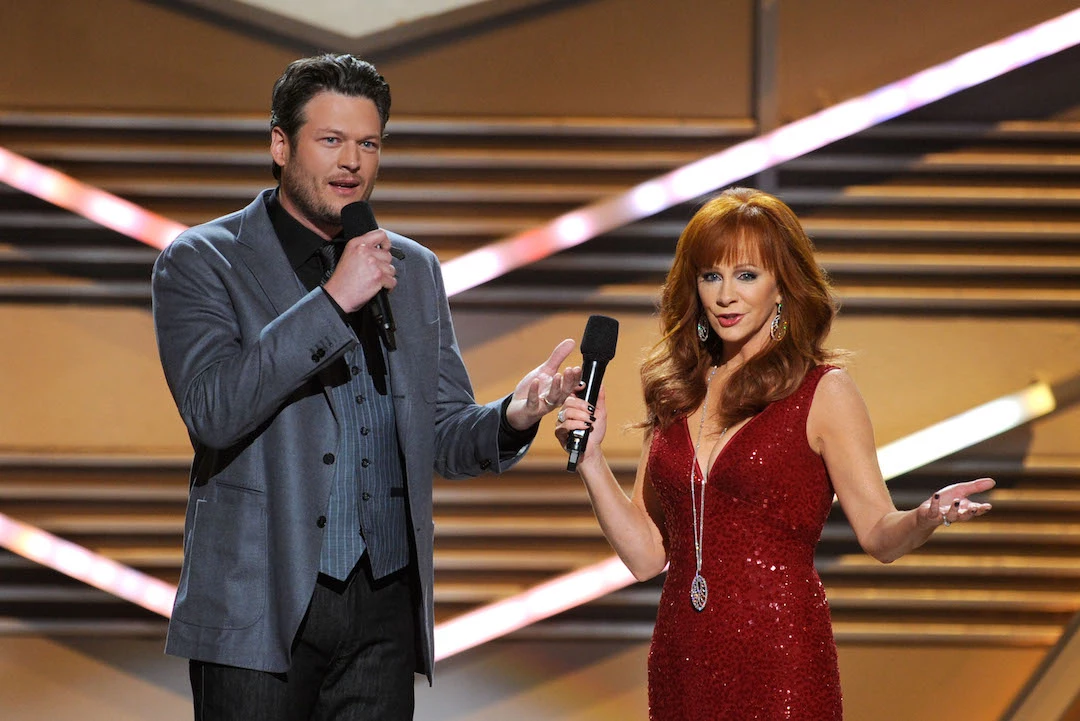
At 69, Reba McEntire remains a formidable presence, yet behind her burgundy sequined gown lay a growing weariness. The industry was whispering about retirement, critics called her recent work "formulaic," and radio stations favored younger artists. Into this tension stepped Blake Shelton, whose signature Oklahoma charm carried a surprising edge that night.
During an impromptu performance segment, after Reba delivered a flawless a cappella verse of her hit "Fancy," Shelton intercepted the microphone. He bypassed the usual pleasantries to issue a public "gauntlet". Recalling her early, raw gospel recordings, Shelton challenged her to return to her roots. "Show everybody that you've still got that fire, that you haven't sold out to the Nashville machine," he declared. The room fell silent as the subtext became clear: he was calling out her artistic compromises in front of the entire Nashville establishment.
The fallout was immediate. While the industry saw a "marketing goldmine" and a "comeback opportunity," Reba felt a deeper, more personal ache. The challenge struck a nerve because it was accurate; she had spent years chasing streaming numbers instead of her own instincts.

Seeking a path forward that wasn't dictated by label executives, Reba connected with young gospel singer Christine Robbins and veteran pianist Walter Benson—who had once recorded with Reba's late mother. In Walter's modest Germantown studio, away from the sterile commercial environment, Reba finally found the "truth" Shelton had demanded.
Listening to unreleased recordings of her mother, Reba realized that gospel isn't about vocal acrobatics or "radio-friendly" production. As her driver Kenneth wisely noted, it is about "testimony"—the act of standing up and saying, "This is my truth… and I'm still here".
Rejecting a soulless major-label deal that would have turned her faith into a gimmick, Reba chose to record independently. Her response to Shelton wasn't a defensive statement or a social media post; it was a return to a version of herself that values vulnerability over chart positions. By embracing the struggle and the "gospel of someone who's been through the fire," Reba McEntire didn't just silence the room—she reclaimed her voice.