
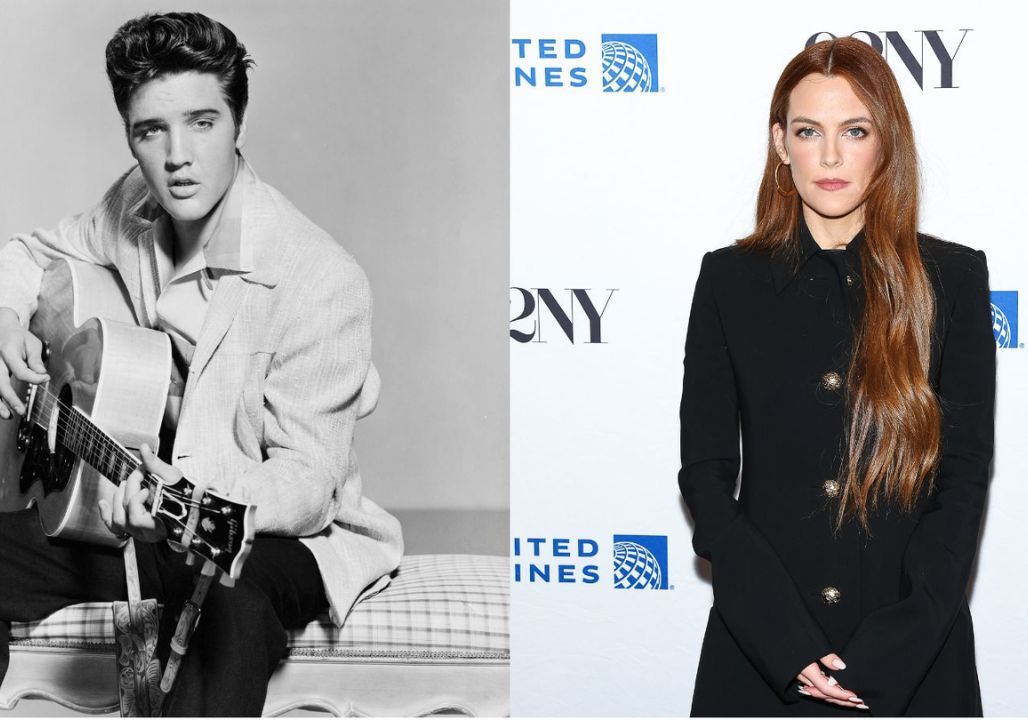

Introduction:
When Legacy Finds a Voice: Riley Keough's Quietly Powerful Tribute in Memphis
On a still evening in Memphis, something remarkable unfolded beneath the soft glow of a theater stage. As Riley Keough stepped into the light, the atmosphere shifted. What began as curiosity among the audience soon transformed into a deeply emotional experience—one that transcended performance and entered the realm of memory, legacy, and connection.
Granddaughter of Elvis Presley, Riley carries a name that resonates across generations. Yet that evening, she did not rely on its weight. Instead, she offered something far more intimate: a quiet, sincere interpretation of "When Doves Cry," the iconic song by Prince.
From the very first note, the room fell into silence.
Her voice moved gently, unhurried and restrained, allowing each lyric to breathe. There was no attempt to replicate Prince's intensity, nor any effort to echo the grandeur often associated with Elvis. Instead, Riley created a space of reflection—one where past and present seemed to meet in delicate balance.
Under dim blue lighting, her presence remained calm and grounded. The performance unfolded without spectacle, driven not by technical perfection but by emotional authenticity. It was clear that this moment was not about proving anything. It was about honoring something.

As she reached the familiar lines—
"Maybe I'm just like my father… maybe I'm just like my mother… when doves cry…"
—the meaning shifted. Sung by her voice, those words carried a new resonance. They no longer belonged solely to the song; they became a quiet reflection of identity, inheritance, and the invisible threads that bind generations together.
The audience responded instinctively. Some leaned forward, others remained completely still, as if afraid to disturb the fragile atmosphere. Memories surfaced—of Elvis's timeless recordings, of Prince's fearless artistry, of music that had shaped entire lifetimes.
In that moment, Riley Keough did something rare. She did not stand in the shadow of two legends. She stood between them—bridging their legacies with humility and grace.
The performance built not toward a dramatic climax, but toward a feeling. Each note carried a sense of restraint, as though the music itself understood the weight of what it represented. When the final phrase arrived, she held it gently, letting it dissolve into silence rather than forcing a conclusion.
And then—stillness.
No immediate applause. Just a lingering pause, filled with emotion.
When the audience finally rose, the response was not explosive, but deeply heartfelt. A standing ovation followed, accompanied by quiet tears and reflective smiles. It was not just admiration for a performance—it was gratitude for a moment that felt profoundly human.

Riley acknowledged it with a simple bow and a soft smile, choosing not to speak. Words, in that moment, would have felt unnecessary.
Memphis has long been a city defined by music, by voices that echo far beyond their time. Yet this particular evening carried a different kind of significance. It was not about greatness or reinvention. It was about connection.
Long after the applause faded, one feeling remained clear: legacy is not something that demands attention—it is something that endures, waiting patiently for the right voice to carry it forward.
And sometimes, all it takes is a single song—sung with honesty—to remind the world that even the most legendary echoes never truly disappear.