
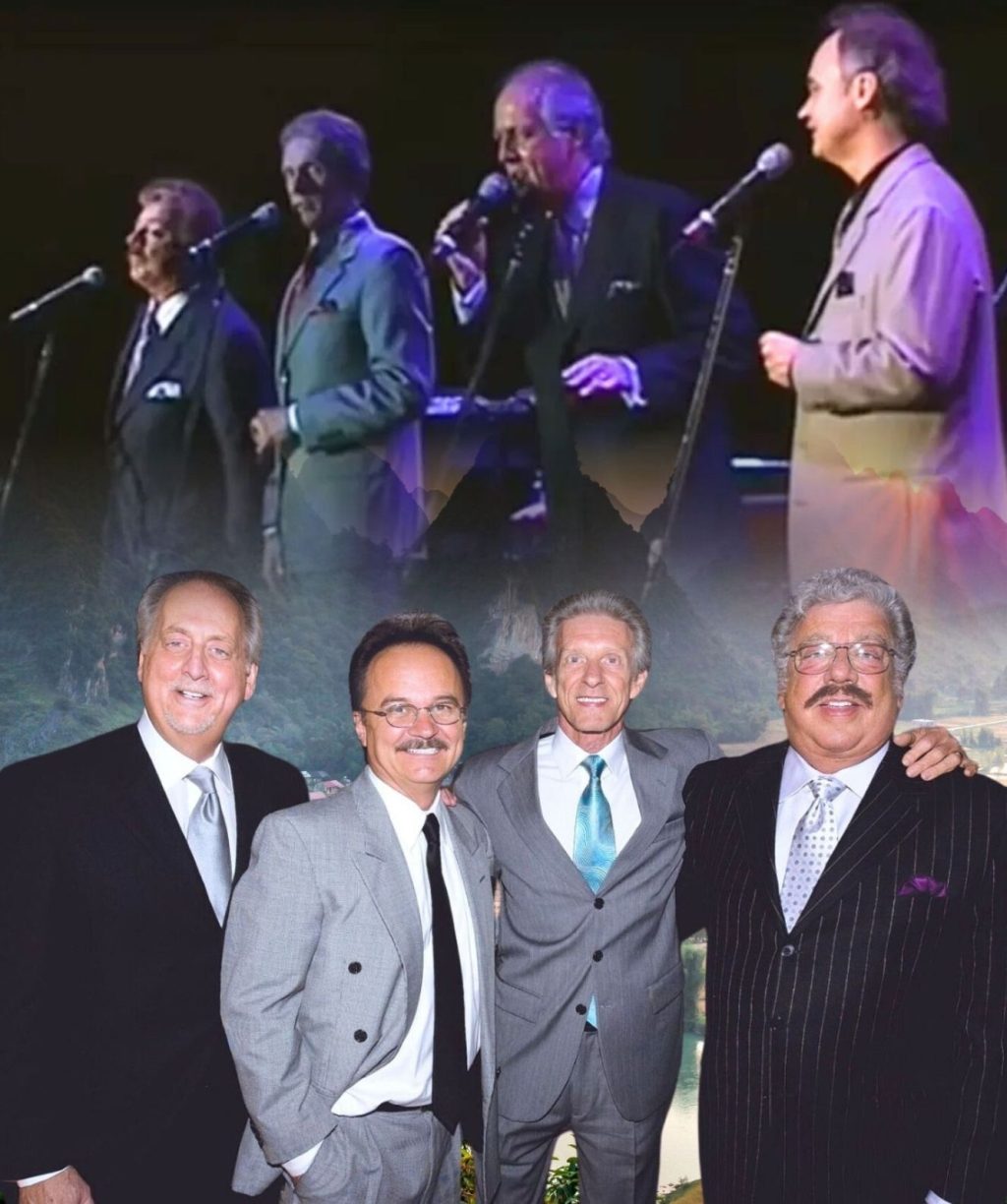
FOUR VOICES, ONE FINAL NIGHT — WHEN THE STATLER BROTHERS SANG THEIR LAST THANK YOU AND THE SILENCE SPOKE FOR EVERY HEART
There are evenings in music history when the air itself seems to carry a quiet understanding. No announcement is necessary. No grand explanation is required. The audience arrives already sensing that something important is about to end, and that once it passes, a chapter of their own lives will quietly close with it.
Such a night unfolded in Virginia when The Statler Brothers walked onto the stage together for the final time.
It was late evening. The stage lights were warm but gentle, casting a soft glow across the room. And when the four men appeared, something subtle yet powerful moved through the crowd.
They walked more slowly than they once had. The years were visible now in their posture and their faces. Yet the moment they stood side by side, the truth that had always defined them remained unmistakable:
The bond between them was still intact.
For nearly four decades, their harmonies had traveled through radios, church halls, long car rides, and quiet living rooms across America. Their voices had accompanied weddings, family gatherings, Sunday mornings, and countless ordinary moments that slowly become the fabric of a lifetime.
That history seemed to hover in the air even before the first note.
Many people in the audience were already emotional. Some held programs tightly in their hands. Others wiped their eyes before the music had even begun. The room carried the quiet tension of thousands of listeners preparing themselves for something they knew they could not quite prepare for.
Because this was not simply another concert.
It was a farewell.
When the opening chords of "Thank You World" finally began, something remarkable happened.
The entire audience rose to its feet.
No one had asked them to stand. No announcement had been made. Yet remaining seated suddenly felt impossible. People stood instinctively, almost as if honoring a moment larger than themselves.
And there they remained—thousands of listeners standing together in gratitude.
There were no elaborate stage effects. No dramatic farewell speeches. The Statler Brothers did not attempt to transform the moment into spectacle. Instead, they allowed the song itself to carry the weight of the evening.
And that simplicity made it even more powerful.
As the harmonies began to unfold, the sound felt familiar in the most comforting way. These were the same voices that had traveled through decades of country and gospel music. The same voices that had once backed Johnny Cash on the road before becoming stars in their own right.
But now those voices carried something new.
They carried farewell.
Each lyric of "Thank You World" sounded less like a performance and more like a conversation between the group and the people who had supported them through the years.
The words expressed gratitude—not only for success, but for the shared journey between artist and audience. It was a thank-you not simply for applause, but for the memories built across thousands of nights and countless songs.
As the harmonies rose and blended, many in the crowd found themselves unable to sing along.
Not because they did not know the words.
But because emotion had settled too deeply in their throats.
Hands covered trembling mouths. Shoulders leaned gently against friends and family members who had come to share the moment together. Some listeners closed their eyes entirely, choosing to listen with memory rather than sight.
In that shared hush, the room felt less like a concert hall and more like a gathering of people remembering the same chapters of their lives.
Because for many in attendance, the Statler Brothers had not simply been entertainers.
They had been companions through time.
Their songs had filled kitchens during early mornings, played softly through car speakers on long country roads, and echoed through living rooms where families gathered after church.
Their harmonies had become part of everyday life.
And now those voices were offering one final song.
The performance moved gently forward, unhurried and sincere. The four men stood close together as they had done for decades, allowing their voices to weave the familiar harmony that had always been their signature.
In that moment, the audience understood something deeply personal.
They were not simply watching the end of a musical group.
They were saying goodbye to a piece of their own history.
The final notes of "Thank You World" lingered softly in the air. The harmony held for a brief moment longer than expected, as if reluctant to let go.
Then the song ended.
For several seconds afterward, the entire room remained still.
No applause. No movement. Only the quiet realization that something meaningful had just passed.
It was a silence filled not with emptiness, but with shared gratitude and gentle farewell.
Eventually the applause arrived—warm, steady, and heartfelt. Yet even as the crowd clapped, many sensed that the true message of the evening had already been spoken.
Not through speeches.
Not through dramatic gestures.
But through four voices offering their final harmony.
And in the end, when the music faded and the lights softened, it was the silence that carried the deepest meaning.
Because sometimes the most powerful farewell does not need words at all.
Sometimes, the silence says everything.