
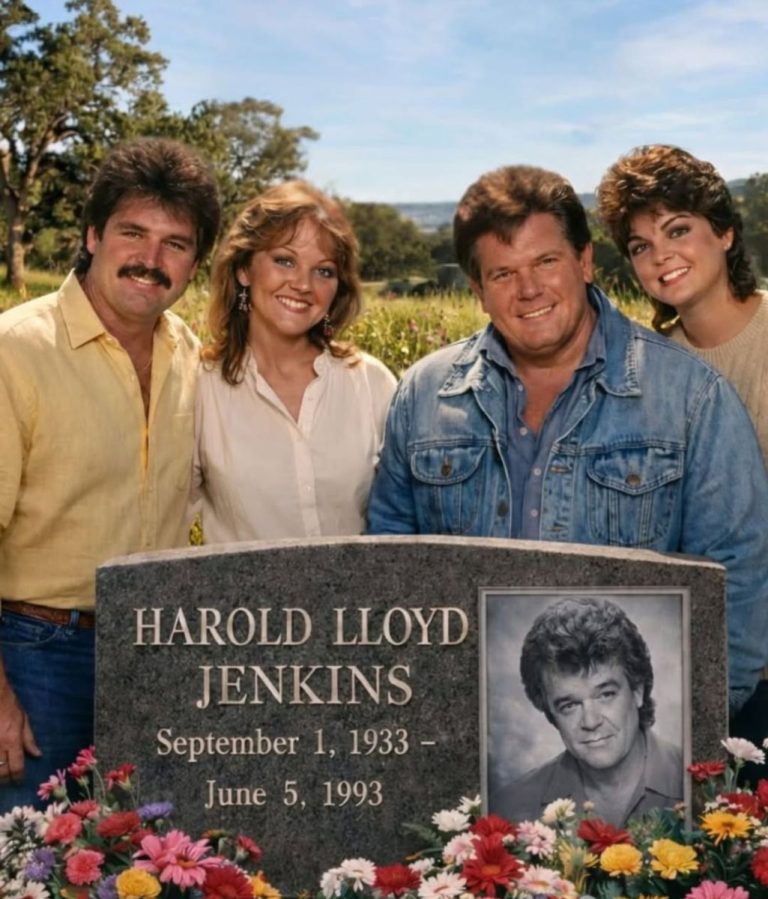
 For decades, the world knew him as Conway Twitty, the towering voice behind an astonishing 55 No. 1 country hits. His songs filled radios, dance halls, and living rooms across America, carrying stories of devotion, longing, and perseverance. To millions of listeners, he seemed larger than life — a man whose smooth baritone could turn any lyric into something unforgettable.
But the man behind that name began life very differently.
He was born Harold Lloyd Jenkins, a boy from the Mississippi Delta, raised during the difficult years of the Great Depression. In that humble landscape of cotton fields and dusty roads, music drifted through the air like a quiet companion. Gospel hymns echoed through church walls on Sunday mornings. Blues melodies floated across porches and small-town gatherings in the evening.
Those sounds shaped the young boy long before he ever stepped onto a stage.
Harold's family worked tirelessly just to keep food on the table. His parents carried the kind of burdens that many families of that era understood — long hours, uncertain pay, and the constant pressure of making ends meet. In that world, dreams often seemed like luxuries.
Yet music found him anyway.
For Harold Jenkins, singing was never simply entertainment. It was a lifeline, a way to express feelings that words alone could not carry. When he sang, people noticed. There was something unmistakably genuine in his voice — a tone that sounded lived-in, weathered by experience even when he was still young.
But the road ahead was anything but easy.
The music industry did not immediately embrace him. In fact, it rejected him more than once. Record labels hesitated. Opportunities slipped away. Money became scarce. Years passed with little recognition, and the dream that once seemed so vivid began to fade into long stretches of uncertainty.
Many artists would have walked away.
Harold Jenkins did not.
Instead, those difficult years forged something extraordinary within him. Every disappointment deepened the emotion in his voice. Every hardship sharpened the honesty in his storytelling. By the time the world finally began to listen, he had become something rare — a performer whose voice carried the weight of real experience.
It was during that climb that he adopted the stage name Conway Twitty, inspired by a combination of two small American towns. The name sounded memorable, distinctive, almost mysterious. Soon, audiences everywhere would know it.
And once the breakthrough arrived, it arrived with remarkable force.
Song after song climbed the charts. His voice — warm, expressive, unmistakably sincere — became a defining sound of country music. Fans recognized something authentic in the way he delivered a lyric. He did not simply sing about emotion; he seemed to carry it inside every note.
Over time, the numbers grew astonishing.
Fifty-five No. 1 hits.
A record that placed him among the most successful artists in the history of the genre.
Yet behind that remarkable success, something quieter remained hidden.
Conway Twitty rarely spoke publicly about the personal weight he carried. On stage he appeared confident and composed, delivering performances that seemed effortless. Off stage he remained deeply dedicated to his family, his music, and the audiences who had supported him for so many years.
But according to those closest to him, the pressures of such a career were never simple.
Years after his passing, members of his family began to share a deeper understanding of the man they knew privately. They described a person who felt enormous responsibility — not only to his listeners, but to the people who worked beside him and the loved ones who relied on him.
He carried expectations with quiet determination.
Tour schedules stretched endlessly across highways and cities. Recording sessions demanded perfection. Fans expected the same emotional honesty night after night. Through it all, Conway remained committed to delivering music that reflected genuine feeling.
What his family revealed was not scandal or controversy.
It was something far more human.
They spoke about his humility, about the way he never forgot the struggles of his early life. Even after achieving remarkable success, he remembered the days when doors closed and opportunities seemed impossible to find.
Those memories stayed with him.
They shaped the kindness he showed to people around him — musicians, crew members, and fans alike. He understood what it meant to work hard for every chance. That understanding gave his music an authenticity that listeners could sense immediately.
The family also described his deep love for the craft of songwriting and performance. For Conway, music was never just a career. It was a calling that demanded sincerity.
Perhaps that is why his songs continue to resonate long after his voice fell silent.
Each performance carried echoes of the boy from the Mississippi Delta who once listened to gospel music drifting through a church window. Each lyric reflected the perseverance of a young man who refused to abandon his dream when the world seemed unwilling to listen.
In the years since his passing, fans have revisited those recordings with renewed appreciation.
Because the truth his family revealed was simple yet profound.
Behind the legend of 55 chart-topping songs stood a man shaped by hardship, strengthened by determination, and guided by an unwavering belief in the power of music to tell honest stories.
That truth may never have been spoken loudly during his lifetime.
But it can still be heard — clearly and powerfully — every time Conway Twitty's voice begins to sing.